People build a life from little routines. The morning cup put perfect on the counter, the preferred sweater chosen for the weather, the quiet satisfaction that comes from locking the door and going out with a strategy. For grownups and kids with intellectual and developing disabilities, I/DD Attendant Care can transform those day-to-day minutes right into dependable steps towards freedom. The job looks simple from the outdoors, yet it is technological, regular, and deeply individual when done well.
I/ DD Attendant Care is not a solitary service, it is a collection of practical assistances woven into everyday living. Bathing, dressing, preparing meals, managing medications, organizing transportation, exercising safety and security skills, even constructing the social confidence to request assistance at a store. The typical string is the objective of helping people live where and just how they favor, with as much control as possible. Good consequent care aspects specific pace, suits sensory and cognitive needs, and pushes skills ahead without taking the wheel far from the individual that need to be steering.
What self-reliance actually resembles in everyday routines
Independence is not the absence of assistance. It is support that fades at the right times and magnifies when the risks are greater. I once worked with a boy who can make his own morning meal yet avoided the cooktop Additional hints after a small oil flare-up terrified him. We mapped out the regular with each other. He prepped every little thing chilly on tranquil mornings, after that exercised turning the heater on and off with me standing close by. Over a month, he advanced to scrambling eggs while I coached from the table, then made morning meal alone with me inspecting the frying pan after. 6 weeks later on, he texted an image: eggs, salute, and a smile. The success was not simply cooking, it restored a component of his day that he controlled.
Small victories like that come from the right suit of assistance and difficulty. Attendants do not just complete tasks, they simplify them, series them, and share them securely. That might imply color-coding drawers to reduce choice exhaustion, using a visual timer to make bathing predictable, or placing a grab bar exactly where a person gets to instinctively. These details matter more than any motto concerning independence.
The heart of I/DD Attendant Care: choice and dignity
Attendant care need to safeguard option prior to it safeguards convenience. It could be faster to choose a clothing and dress somebody promptly, however it is a lot more considerate to use 2 choices, await an option, and guide only as required. The individual's preferences come first, even if that indicates a purple t shirt on picture day or a sandwich for breakfast. Dignity often stays in those small acts of self-expression.
This strategy takes perseverance. It additionally takes restraint. Assistants that rush to repair whatever threaten the opportunity to learn. The appropriate move usually seems like a simple inquiry: just how do you want to do this? When someone can not connect traditionally, attendants focus on the signs that still reveal choice, from a look to a gotten sleeve to a calm smile when the appropriate songs plays in the background. Paying attention expands beyond words.
Assessing needs without boxing individuals in
A solid solution starts with a clear image of skills, goals, and supports. Great evaluations are sensible and conversational, not a battery of tests that make individuals seem like they get on trial. I like to observe an individual's typical day, after that discuss what matters most to them and those that understand them best. Where do they feel stuck? What would make mornings much less demanding? When do they light up?
From that structure, I/DD Attendant Care plans shape supports around capability. Say a person can wash their upper body separately however requires aid with reduced body jobs. The consequent sets up the bathroom for safety and security, after that waits just outside the drape to help only at the points that matter. If mastery is limited, the plan may include pump bottles as opposed to flip caps, and long-handled sponges placed where they are easy to reach. If executive feature difficulties make sequence hard, a water-proof aesthetic timetable can sit at eye level in the shower. A great strategy prepares for the friction points and gets rid of them.
Most strategies need to bend as skills grow. A constant problem in long-lasting treatment is competence capturing, where individuals obtain stuck under a level helpful that no longer matches their capacities. Regular check-ins avoid that. I recommend a quick abilities evaluate every 4 to 8 weeks, even if nothing appears incorrect. Frequently you discover something prepares to tip down.
The auto mechanics of daily living support
Attendant treatment is granular. It is successful or fails in the details.
Mornings established the tone. If the morning routine is chaotic, the remainder of the day turns off balance. Clear series help: wake, bathroom, medications, breakfast, bag, door. If a person is delicate to noise or touch, assistants change the cadence and environment. For a person who alarms conveniently, I avoid abrupt lights and utilize the same greeting each morning. For a person that perseverates on one action, I break the task right into timed segments and use a gentle timely after each. Routine is not rigidness, it is a foundation that offers the day shape.
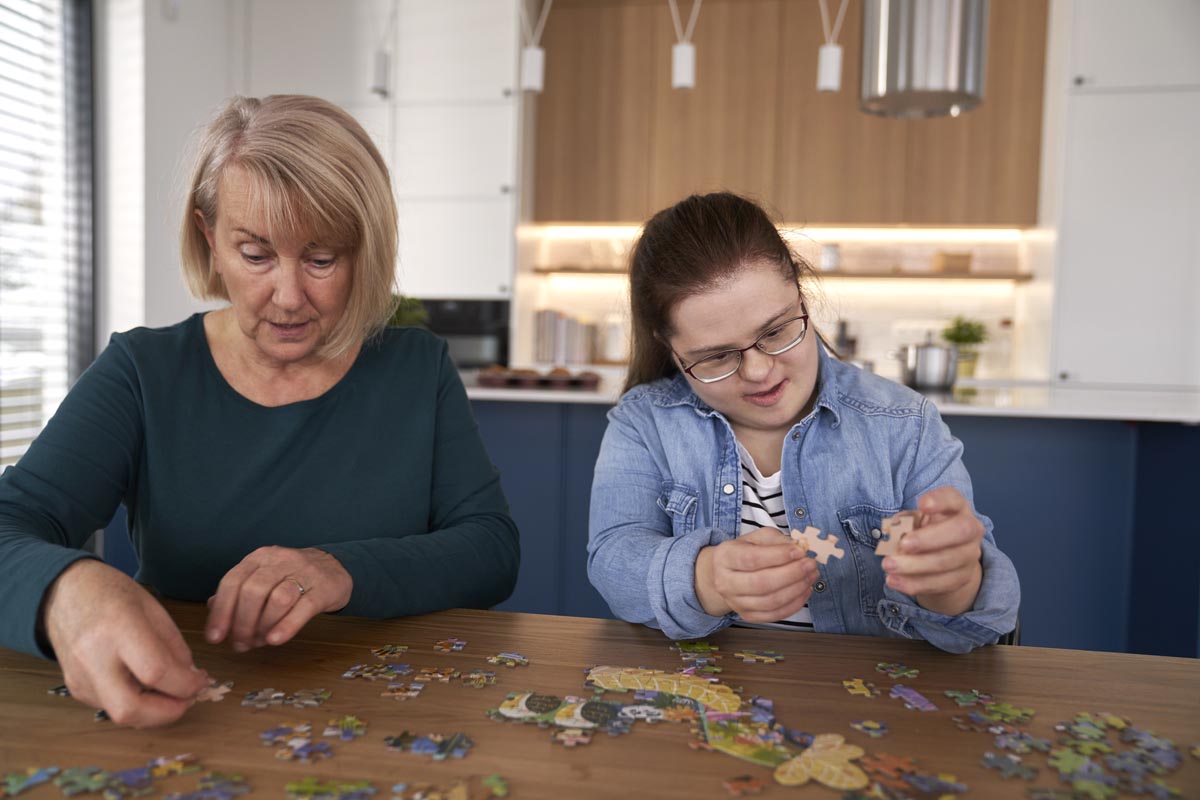
Mealtimes are an additional support. Nutrition issues, yet so does agency. If the person joins buying and standard meal prep, they are more likely to attempt new foods. I such as two-level choices: do you want tacos or pasta tonight, then soft tortillas or thick skins. That permits control without frustrating decisions. Safety is non-negotiable, so we pair blades with reducing boards that grasp, use finger guards when needed, and store allergen labels in a visible area. Gradually, obligations can move from cleaning fruit and vegetables to chopping soft foods to cooking at the stovetop with supports in place.
Medication assistance depends on the individual's capacities and the drug's risk profile. For low-risk regimens, assistants can establish a regular pill organizer with color-coded days and time-of-day areas, then hint with a phone alarm system. For higher-risk meds, check and documentation are crucial, and in some states only licensed team can carry out. In either case, the objective is consistent adherence without turning medications right into a resource of stress. Lots of people take advantage of linking medication to a routine they appreciate, such as taking the night dosage right after the favorite show starts.
Hygiene and clothing require both regard and effectiveness. Freedom grows when apparel is pre-sorted by type or clothing. For great motor difficulties, adaptive clothes with magnetic closures can be a video game changer. Bathing schedules ought to match the individual's convenience and social norms, not a stiff list. One young woman I supported disliked hair cleaning because water in her eyes activated panic. We shifted to a visor, angled the handheld showerhead downward, and played her preferred playlist. The frequency issue went away when the sensory issue was solved.
Laundry, house cleaning, and buying are sensible skill-builders. Sorting laundry can be educated with aesthetic bins for lights and darks. Vacuuming may need a smaller, lighter version to minimize fatigue. At the shop, attendants can help rehearse a short script for finding items, then hang back as the person speaks with a staff, actioning in just if asked. Little receipts end up being small documents of success.
Building safety skills without instilling fear
Safety is not only a set of rules, it is a routine of focus. Fire drills, cooking area security, road going across, complete stranger understanding, emergency situation get in touch with steps, and secure boundaries on the internet all fit below. The catch is frightening a person right into compliance. People remember fear, but they rarely construct resilient behaviors from it. I prefer short, repeated technique in realistic settings.
Consider road safety. As opposed to repeating look both ways constantly, we choose two crossways with various website traffic patterns and technique at quiet times. We rehearse checking out the stroll signal, judging lorry speed, and identifying when to ask for help. If noise is overwhelming, we utilize noise-reducing earbuds and plan crossings at calmer times of day. The person discovers they have devices to manage the setting, not simply guidelines to obey.
For cooking area security, we start with cold prep, then electrical appliances like a microwave or toaster oven, after that stovetop work with secured heaters and pot takes care of turned inward. If an attention gap is likely, timers and car shut-off devices come to be conventional, not stigmatizing. We reduce open fires, safe and secure knives, and never transform safety and security right into a tug-of-war.
Attendant care is a team sport
Attendants hardly ever work in isolation. Family members, guardians, case managers, therapists, and occasionally registered nurses all have a role. The most effective end results emerge when every person uses the same playbook. If work-related therapy educates a particular clothing strategy, attendants ought to strengthen it daily. If the behavior expert recommends a redirection cue when anxiety escalates, that hint should be part of the routine all over, not just in a session.
Communication stops what I call unseen drift, when an assistance gradually slips away without anybody discovering. A quick once a week note works wonders: what worked out, what was hard, what we are attempting next. When individuals relocate between setups, such as from institution to a grown-up program, a one-page account summarizing preferences, causes, relaxing approaches, and top goals can squash the learning curve.
Cultural respect and person-specific rhythms
Culture educates whatever from diet regimen and clothing to boundaries around personal privacy and touch. Some families anticipate everyday common meals, others prioritize individual choice. Some people like same-gender attendants for individual care. The treatment plan must show these facts without any person needing to defend them. I constantly ask about religious awareness, fasting days, apparel demands, and favored introductions. Obtaining these best builds count on much faster than any type of policy speech.
Rhythm matters also. Not every person is wired for mornings. If a person thrives with a later begin, improving schedules to preserve power can be the difference between consistent dispute and consistent progression. On the other side, some individuals benefit from a quick early morning routine to direct restlessness right into deliberate task. Matching the person's all-natural pace is not coddling, it is clever support.
Technology that assists, and when it enters the way
Technology can increase freedom when chosen meticulously. Visual schedules on a tablet, medication reminders on a smartwatch, door sensing units that alert if a person wanders in the evening, navigation applications with conserved paths and pictures of sites, shared calendars for consultations. These tools work best when they are integrated into regimens and described with respect: the tool is a tool for your objectives, not a leash for somebody else's comfort.
There are restrictions. A lot of informs reason alarm system fatigue, and complicated user interfaces frustrate individuals that require less steps, not a lot more. Privacy additionally matters. Cams inside living spaces can turn a home right into a surveillance area. If safety and security calls for surveillance, choose services that maintain dignity, such as movement sensing units for fall detection made use of with clear permission and boundaries.
Training and consistency: how attendants provide quality
Professionalism turns up daily. Assistants take advantage of concentrated training in interaction techniques, secure transfers and body technicians, basic emergency treatment, infection control, de-escalation, and documents. They likewise need recurring training in person-centered reasoning. The ability is not only carrying out jobs, it is recognizing when to back off and allow the person take the lead.
Consistency does not imply strength. It means predictability where it matters, and adaptability where it assists. If the strategy states we prompt 30 secs before helping, we really time that pause. If we are attempting to discolor prompts this month, we measure the modification. Many firms utilize basic information sheets or apps to record whether triggers were verbal, gestural, or physical, and how they altered in time. This is not just documentation, it is the feedback loophole that maintains support lined up with growth.
Money, hours, and the fact of resource limits
Resources form what is possible. Many I/DD Attendant Care services are moneyed by Medicaid waivers or state programs, and hours are authorized based upon analyzed requirement. An individual could have 20 to 40 hours per week, often extra, in some cases much less. When hours are limited, prioritization comes to be vital. We focus supports around safety and security, wellness, and the person's leading objectives, then search for methods to develop freedom within those constraints.
Here is a simple strategy that has worked across many homes:
- Identify 2 everyday jobs that, if grasped, would certainly conserve one of the most time or danger. Emphasis intensive support there, and keep others without big changes. Create a 30-day skill-building strategy with two or three measurable steps. Reflect on at day 15, readjust, and decide at day 30 whether to continue or shift focus.
This strategy protects against scattershot initiatives and develops visible progress. It likewise respects that people have only so much perseverance for being coached.
Behaviors are messages, not obstacles
When somebody rejects a shower or tosses a knapsack, the actions is informing you something. Pain, discomfort, stress and anxiety, previous trauma, sensory overload, or an inequality in between need and power can all show up as resistance. Assistants who identify feature over form solve problems faster. I remember a male who started slapping his arm each time we came close to the sink. We checked water temperature level, soap, and timing. The culprit was a tiny cut under his watchband that hurt with warm water. When we changed to lukewarm and replaced the soap, the slapping vanished. No habits strategy required.
Of program, some difficulties are complex. For consistent self-injury, hostility, or elopement threats, seek advice from behavior analysts or psycho therapists and integrate their strategies with day-to-day care. One of the most important part is consistency. A carefully made support technique fails if it is applied only on Tuesdays.
Community access and the long game of belonging
A life lived only in your home is smaller sized than it requires to be. Community gain access to is a core component of I/DD Attendant Care, not a perk. The supermarket, library, YMCA, coffeehouse, belief neighborhood, volunteer jobs, parks, and local clubs are areas where skills generalise and friendship can take root. Assistants scaffold participation by previewing sensory atmospheres, practicing scripts, and using discreet assistances like hint cards or phone notes. The goal is not to pass as another person, it is to participate as oneself with the ideal backing.
Transportation is often the bottleneck. Where possible, we instruct course planning, rideshare safety scripts, or bus riding with a travel fitness instructor. For those who can not travel separately, attendants can still develop predictability by maintaining a constant weekly rhythm and progressively presenting brand-new locations with clear expectations and leave plans if the outing becomes overwhelming.
Risk tolerance, dignity of risk, and just how to decide
There is no self-reliance without the possibility of mistakes. The phrase dignity of danger captures that truth. Yet families and providers bring actual obligation for safety and security. The sensible question is exactly how to balance them. I utilize a straightforward matrix: just how extreme is the prospective harm, and exactly how most likely is it. High severity and high probability demand I/DD Attendant Care services Willamina stringent supports. Low extent and reduced probability invite experimentation. Everything in between require testing in controlled conditions.
If someone wishes to cook bacon, we take into consideration splatter guards, long tongs, sleeves, and guidance that is close initially, after that farther. If an individual intends to handle their very own costs, we may begin with a reloadable card capped at a small amount and evaluation invoices with each other every Friday. The secret is to state yes as typically as we securely can, and to craft a sensible course from direct support to monitored independence.
Staffing realities: discovering the best match
The relationship in between a person and assistant can make or damage the solution. Skill is necessary, yet fit issues, specifically with communication design and sensory preferences. Some people require calm and silent, others love a high-energy trainer. Agencies that permit test changes and motivate responses decrease mismatches. When a modification is required, handle it transparently and rapidly. Dragging out an inadequate suit drains trust fund on all sides.
Turnover is a fact in straight care. To cushion the effect, homes and companies should keep living papers that capture regimens, preferences, and ideas that just experience teaches: which mug is always used, the tune that assists during tooth brushing, the indication that a frustration is coming, the noise that the fridge makes that troubles the person in the evening. These notes maintain the person's quality of life undamaged throughout transitions.
Measuring development without making life a spreadsheet
Data must serve the person, not bury them under graphes. Excellent measurement is basic and tied to objectives the individual respects. If the objective is independent morning meal, we track the variety of triggers over two weeks. If the goal is taking the bus to function, we track successful adventures and any supports utilized. We share results with the person in ordinary language and commemorate what matters to them. A sticker label on the schedule can be a lot more encouraging than a graph just staff see.
When progression stalls, we readjust approaches rather than identifying the person indifferent. Perhaps the step dimension is incorrect, the moment of day is off, or the atmosphere is as well noisy. A small tweak, like moving meal prep to a quieter hour, can reactivate momentum.
Practical borders and ethics
Attendants frequently become a steady presence in a person's life. Borders shield both sides. Specialist distance does not indicate cold, it indicates no double relationships that shadow judgment, clear policies about gifts, and openness when problems occur. Paperwork should be valid and respectful, never ever snide. Personal privacy is not optional. Conversations regarding an individual's treatment take place secretive, and individual details are shared only with those that need to know.
Consent is ongoing, not a single trademark. Individuals can change their minds regarding who assists with intimate care or exactly how a regular runs. When somebody can not provide official consent, we still look for acceptance and look for signs of discomfort, then adapt.
When attendant care intersects with wellness needs
Many individuals served with I/DD Attendant Care have co-occurring health and wellness problems. Seizure disorders, diabetes, GI issues, movement restrictions, and mental health needs are common. Assistants are not an alternative to clinicians, but they are the eyes and ears that see modifications early. Sudden shifts in cravings, sleep, actions, or skin stability are entitled to focus. A fast contact us to a nurse or guardian can prevent a tiny concern from ending up being a crisis.
For flexibility and transfers, proper body technicians protect both the person and the attendant. If a hoyer lift or transfer board is in usage, attendants require hands-on training and checklists to verify tools is safe. Skin checks throughout bathing can catch pressure areas early. Hydration and fiber come to be practical topics when irregular bowel movements risk increases. These are the basics that maintain the rest of life running.
A short, convenient regimen for starting strong
For groups new to I/DD Attendant Care, the first month establishes the tone. Here is a small structure that maintains focus tight:
- Week 1: Build trust and map routines. Observe without rushing to repair. Determine two top priority objectives aligned with the person's preferences. Week 2: Set up the setting. Include visual routines, adaptive tools, and safety assistances. Begin ability practice with clear prompts. Week 3: Fade prompts where safe. Shift one task from shared to person-led. Present one community task with supports. Week 4: Evaluation progression with the person and group. Keep what jobs, change what drags, and plan the next 2 goals.
This rhythm maintains adjustment constant sufficient to feel meaningful, gentle enough to respect convenience, and structured sufficient to reveal results.
What success really feels like
Success is not dramatic. It feels like the individual reaching for the door deal with due to the fact that they recognize where their keys are. It resembles a stable grocery store trip finished without a disaster, or a text sent to a buddy without triggering, or medication tackled time for a month. It seems like a parent who says, I rested with the evening for the very first time in six months, or a worker that says, I did my lunch and my bus on my very own this week.
I/ DD Assistant Treatment makes those minutes by making the common work much better. Attendants appear promptly, respect the individual's regular, educate a skill in pieces, and leave adequate area for the individual to do the difficult part themselves. The reward is liberty that grows, one tiny regular at a time.
The promise of everyday living assistance is basic and extensive: people get to survive their very own terms. Not completely, not without bumps, however with real options and actual development. That is the heart of empowering freedom, and it is why the details of I/DD Attendant Care issue so much.